


Five minutes to stay informed.
The jobs number that sinks the dollar
The Fed is back at the cutting table; the peso doesn’t celebrate
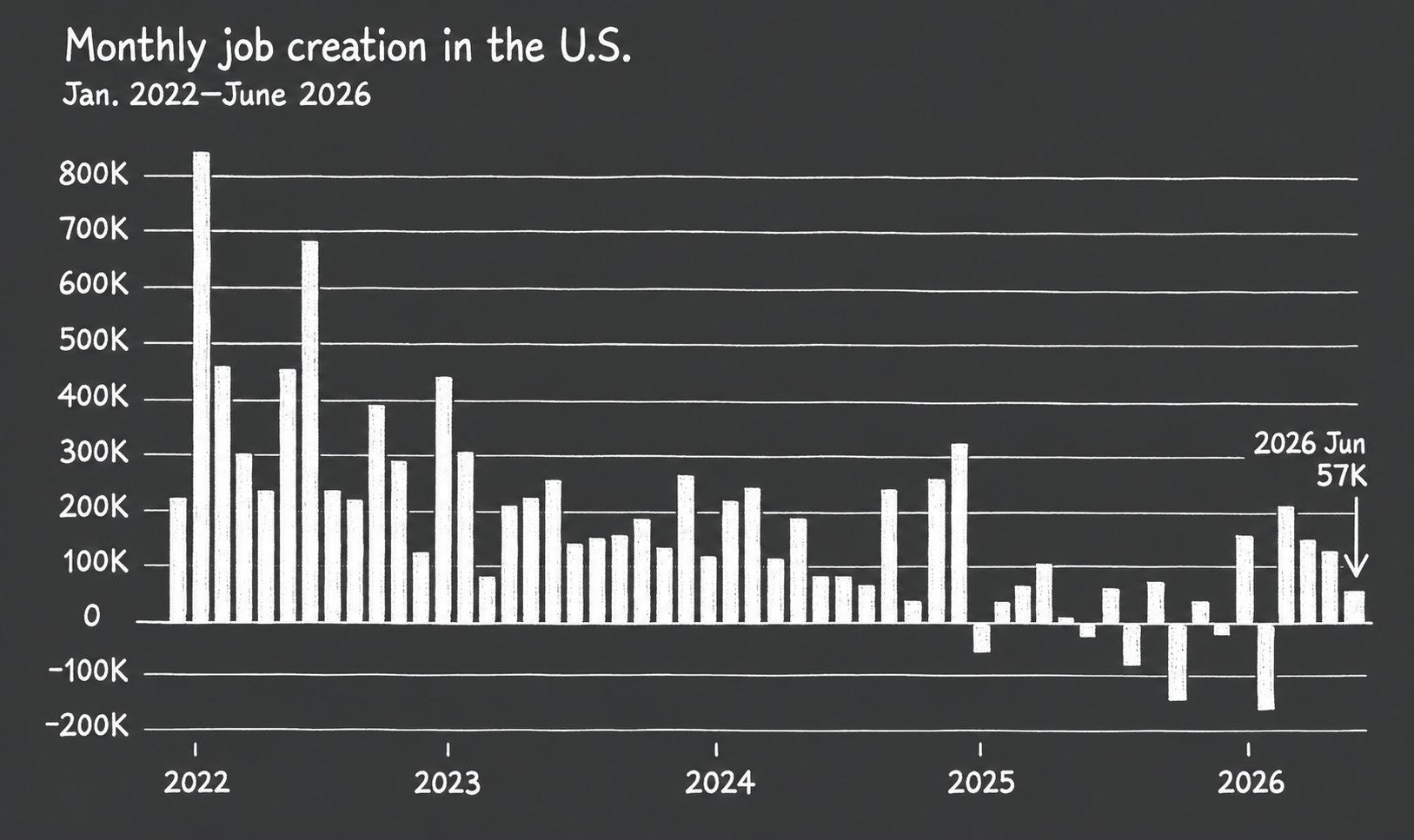
The dollar had its worst day since May 6: US jobs cratered in June and revived the bet on a Fed cut. A tailwind the peso could barely use (Investing).
It rose in the morning to 17.45, but closed weaker, at 17.5485 (−0.29%), as USMCA caution returned. The stock market did recover: the IPC gained 0.42% to 67,247. The good news came from abroad; the ceiling, from within (El Financiero, Ámbito).
It’s the regime we opened yesterday: the peso no longer trades only its fundamentals, but the premium of an annual review that reopens every year. Not even the dollar on its worst day can lift it above that cloud (Ámbito).
BlackPaper Comment: When the peso won’t rise even with the dollar on its worst day in two months, the message is the USMCA‘s, not the Fed‘s. Trade uncertainty became the currency’s ceiling: Mexico no longer cashes the good foreign news, it discounts it against its own risk.
Ebrard looks to Asia
The answer to the USMCA: less dependence, more homegrown production
A day after the US “no”, Ebrard set the response: cut external dependence and produce at home what’s now imported from Asia —penicillin, semiconductors, inputs—. In passing, he revealed the relationship with China is “in a good moment” (Infobae).
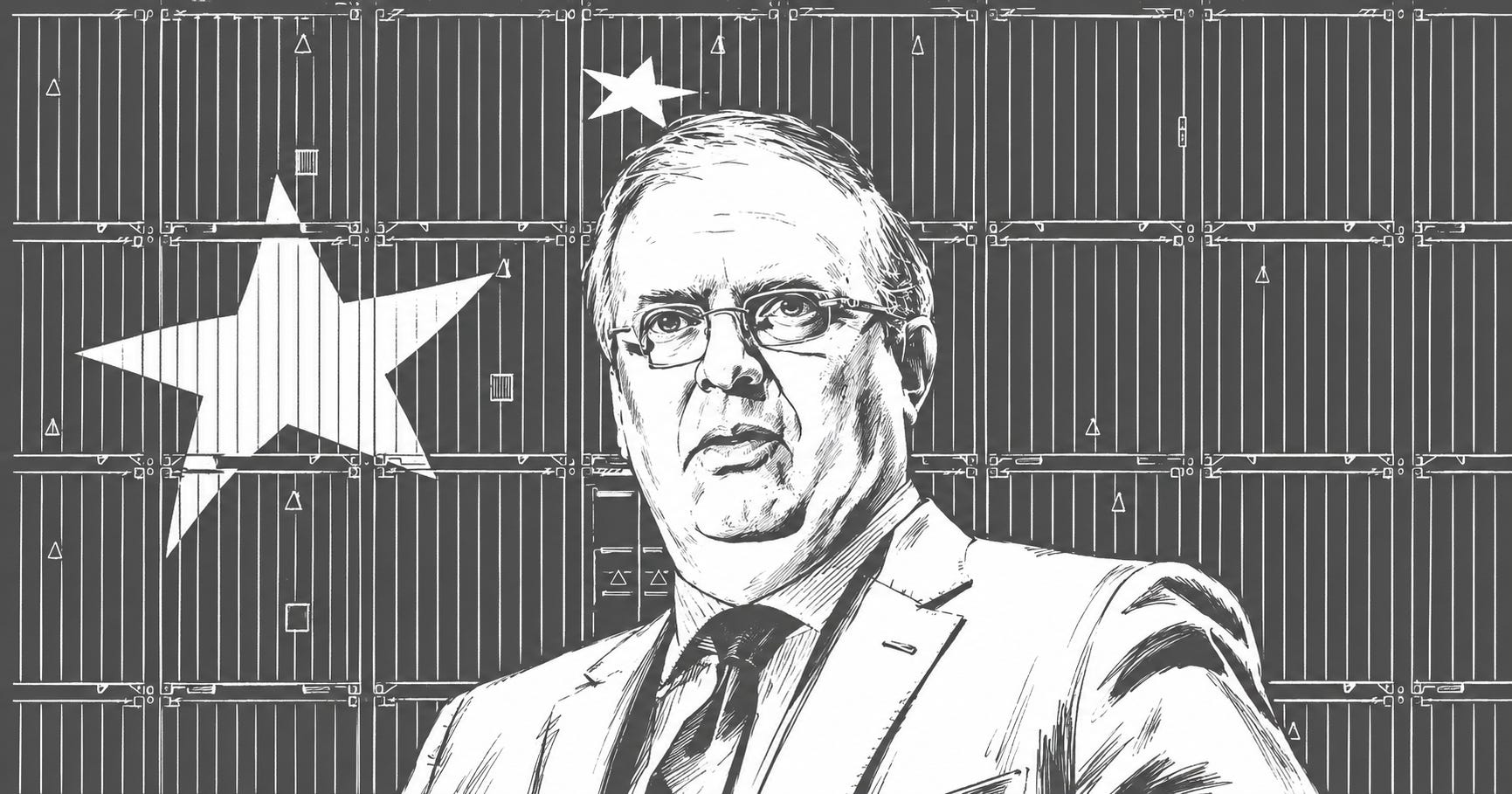
The contradiction is self-evident: he wants less dependence on Asia while touting his China ties. For July 20 he’ll bring three concerns —cut dependence, set review timelines, clarify processes— but denies seeking new treaties (Sin Embargo).
BlackPaper Comment: “Diversify” sounds good until you ask for the instrument. Making semiconductors or penicillin at home is a matter of years and of capital Mexico isn’t putting up. Meanwhile, 40% of foreign investment still comes from the neighbor it now negotiates with blind.
The warning that stings
The UK warns its travelers; Sheinbaum responds
The United Kingdom issued a travel warning to its citizens over the risk of crowds and theft at the World Cup 2026 festivities. Sheinbaum answered at her morning briefing: it’s “safe“ to visit Mexico, no problem (El Financiero).
The warning doesn’t land in a vacuum: it comes days after the deaths by asphyxia at the Paseo de la Reforma celebrations, which the Mexico City prosecutor is probing in four cases. The government defends the World Cup’s image just as its crowd control fell into doubt (Ámbito).
BlackPaper Comment: The World Cup host sells safety; a partner contradicts it in writing. Denying the risk doesn’t erase it: the World Cup euphoria already left dead on Reforma, and for the tourist a foreign warning weighs more than a denial from the National Palace.
The brake you can’t see
Ebrard courts factories; the country can’t give them water or power
Ebrard‘s plan to attract the factories leaving Asia hits a brake that isn’t the USMCA: it’s internal. The nearshoring bottlenecks are water scarcity in the north, insufficient power capacity, insecurity and the lack of specialized talent (Agente Digitalizado).
The symptom is plain: Mexico City budgets 643 water works worth 7,000 million pesos in 2026 alone, and the industrial north drags blackouts at 47°C. It courts the semiconductor maker —which drinks water by the millions of liters— on a grid already rationing (El Congresista).
BlackPaper Comment: Mexico can win the USMCA table and lose the infrastructure one. The factory it wants to bring from Asia needs firm water and power; offering it a country that rations both is selling a house with no foundations. The treaty is the noise; the water, the brake.
Banxico shut the door
Weak jobs revive the Fed, not rate cuts in Mexico
The weak US jobs revived the bet on a Fed cut in September. The question for Mexico is whether that gives Banxico room to lower its 6.50% and aid a GDP analysts already see at 1.07% (El CEO).
The answer is no. Banxico closed its cutting cycle in May; core inflation has spent 26 fortnights above 4% (4.12%), and the board already split on the last vote. The Fed moving doesn’t change Mexico’s price problem (El Financiero).
BlackPaper Comment: The Fed‘s tailwind doesn’t reach Banxico. With core inflation stuck near 4% and the peso under the USMCA premium, cutting to push growth would be relief paid for dearly later. Mexico is left without the monetary lever just when it needs it most.
Breves
The jobs numbers. The US added just 57,000 payrolls in June, half the 113,000 expected, and revised May down to 129,000. The market raised its bet on a Fed cut in September (Investing).
Stocks reclaim 67,000. The IPC gained 0.42% on July 2 to 67,247.79 points, back above the floor it broke in June, though sentiment stays tied to the USMCA review (Investing).
Switzerland knocks. Swiss president Guy Parmelin will visit Mexico next week, Sheinbaum announced: the first European head of state to come since the US “no” to the USMCA (Infobae).
A traveling briefing. On July 3 Sheinbaum takes the morning conference to Michoacán, one of the states with the sharpest security conflict; the staging competes with its backdrop (Milenio).
Chiapas: the small work. Governor Eduardo Ramírez opened on July 2 an 8.8 million peso road in Copainalá; the contrast with the 5.6 trillion of Plan México measures the gap between the mega-plan announced and the asphalt delivered (NVI Noticias).
On the radar
Jul 3 — Morning briefing from Michoacán; the government on security terrain.
next week — The Swiss president’s visit: first concrete signal of diversification.
Jul 20 — 3rd round of the USMCA: Ebrard brings his three concerns.
Sep — The Fed decides whether weak jobs justify the cut the market already bets on.