


It charges more to those who produce most, then wonders why so few produce.
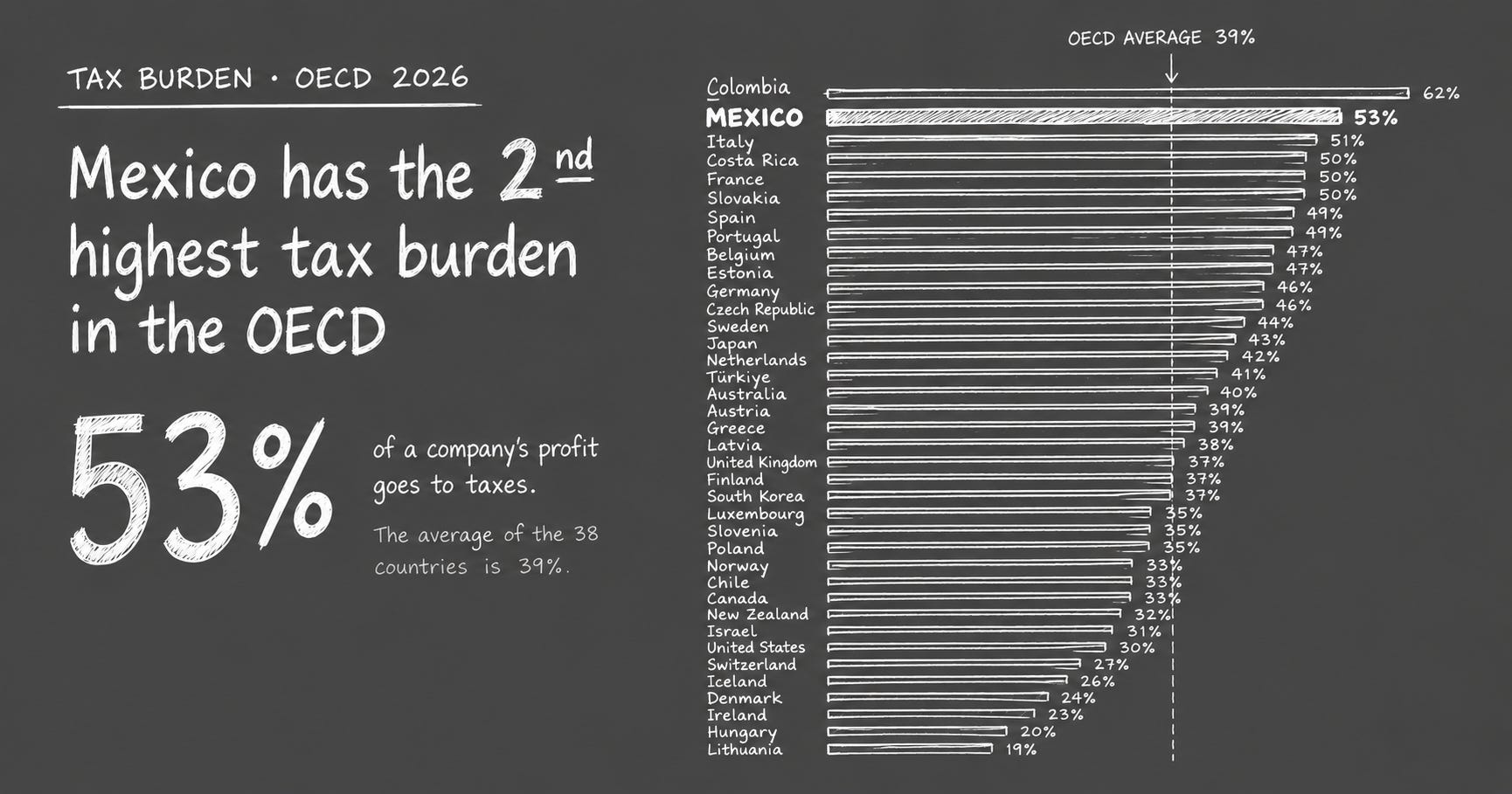
A standard formal, mid-sized manufacturer, without a single fiscal privilege, hands over 53% of its profit in Mexico in taxes and contributions. It is the second-highest burden among the 38 OECD countries: only Colombia (62%) charges more, and every major developed economy —without a single exception— charges less. The figure comes from our own reconstruction of the indicator the World Bank stopped calculating in 2021, using the same methodology and the rates in force in 2026.
Above the entire G7
It’s worth looking at the company this puts Mexico in. Below it sit all seven G7 economies, without exception: Italy (51%), France (50%), Germany (46%), Japan (43%), the United Kingdom (37%), Canada (33%) and the United States (30%). No industrial power on the planet charges its companies more than Mexico. The contrast sharpens with the countries official rhetoric likes to invoke as models of the state: the Nordic welfare states charge less —Sweden 44%, Denmark just 24%—, as do Switzerland (27%) and Ireland (23%). All hand back first-world security, justice and roads for a fraction of what Mexico demands; and Mexico charges almost twice what the United States does (30%), its direct rival for every plant that relocates.
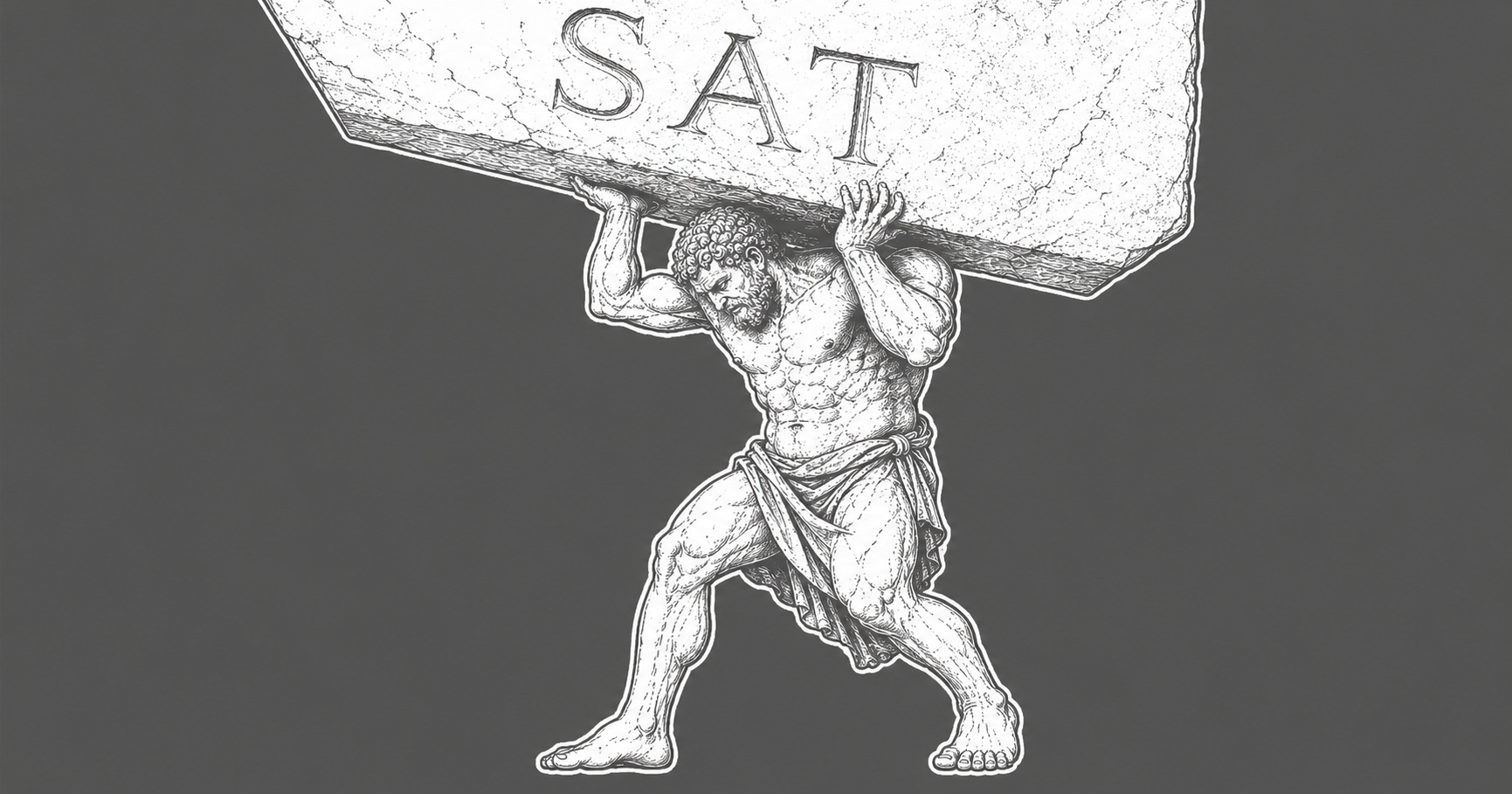
BlackPaper Comment: Mexico charges its companies more than any G7 country, and gives back the security, justice and roads of a country that collects half as much. First-world taxes, third-world state.
It’s worth understanding, too, what that 53% measures, because it isn’t the corporate income tax. The rate adds everything the firm pays out of its own pocket —income tax, property tax, payroll tax—, but the bulk is employer social-security contributions: IMSS and Infonavit. It leaves out VAT and withholdings, which the firm merely passes on. In Mexico a business isn’t crushed so much by taxing its profits as by the cost of keeping employees on the books.
It charges a lot, collects little
And yet, all that burden doesn’t build a rich state. If taxing the entrepreneur were the formula, Mexico would have one; instead, its total revenue barely reaches 17% of GDP, among the lowest in the OECD, whose average tops 34%. The lesson isn’t that there’s more to squeeze, but the opposite: punishing those who produce doesn’t fill the coffers; it only makes producing more expensive.
BlackPaper Comment: The 53% isn’t a fiscal figure: it’s a belief. The belief that the entrepreneur —the engine of the economy— can always be asked for one more liter.
The explanation for that poor harvest isn’t the rates but who pays them. More than half of Mexican workers live in informality, and that isn’t a cultural vice: it’s the rational answer to a system that makes being on the books prohibitively expensive. The base isn’t narrow by accident; the burden narrowed it. Every point of tax on the formal firm is one more argument not to be one, and one more worker without social security, pushed into the shadows by the very state that claims to protect him.
So the system rewards exactly what the country doesn’t need. Because the weight falls on payroll, what it taxes hardest is the act of hiring by the book and growing within the law; the incentive points the other way, toward staying small, informal and invisible. A country that needs more companies and more formal jobs charges its costliest tax precisely for opening companies and giving formal jobs.
BlackPaper Comment: That formality costs so much isn’t a flaw in the system. It is the system, designed by those who see every formal job as a new source of revenue.
Why no one changes it
Behind it lies a pact no government wants to touch. Lowering the burden —so that producing and hiring by the book is worth it— requires shrinking the state, and that’s unpopular among those who live off it. Squeezing the captive, by contrast, is easy: the formal firm is already on the register and isn’t going anywhere. So, term after term, the way out is the same: ask more of whoever already produces, instead of taking the boot off its neck.
BlackPaper Comment: Lowering the burden means governing against those who live off the state; squeezing whoever already pays demands nothing. So, election after election, the captive always loses.
Mexico’s fiscal debate shrinks to “raise or cut taxes,” and when someone proposes “broadening the base,” they almost always mean squeezing someone else. The real question is another: why does a country that needs to grow charge its highest tax precisely to whoever creates wealth and jobs. As long as the entrepreneur is treated as a cash cow and not an engine, that 53% won’t be the mark of a strong state, but the price Mexico charges its own economy for producing.
Primary sources: BlackPaper’s own reconstruction of the Total Tax and Contribution Rate, the Doing Business / Paying Taxes methodology of the World Bank (discontinued in 2021), standardized case from Djankov et al., NBER WP 13756, with rates in force in 2026.
Complementary data: tax-revenue-to-GDP from the OECD (Revenue Statistics); labor informality from Mexico’s INEGI (ENOE).